
If you’re looking for the best futures trading platform for beginners in 2025, you’re making a smart move into one of the most lucrative — and demanding — markets in finance. Futures trading gives retail traders access to commodities, indices, and currencies with significant leverage, tight spreads, and 23-hour trading windows. But not every platform is built with beginners in mind. The wrong choice means a steep learning curve, confusing interfaces, and hidden fees that eat your capital before you find your edge. This guide breaks down the best futures trading platforms for beginners, what to look for, and the gear that separates serious traders from hobbyists.
What to Look for in the Best Futures Trading Platform for Beginners
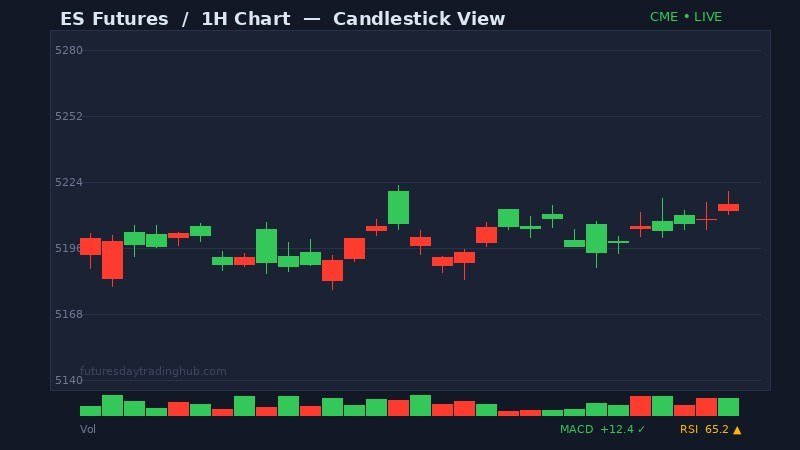
Before diving into our picks, here’s what actually matters when evaluating futures platforms as a new trader:
- Simulated/Paper Trading: The best platforms let you practice with fake money before risking real capital. Non-negotiable for beginners.
- Commission Structure: Look for low per-contract fees ($0.25–$0.85/side is competitive). Avoid platforms with hidden data fees.
- Charting Tools: Futures trading lives and dies by technical analysis. You need clean, fast, customizable charts.
- Order Types: Market, limit, stop-market, stop-limit, bracket orders — all essential for managing risk properly.
- Margin Requirements: Micro futures (MES, MNQ) require as little as $50/contract intraday margin — critical for beginners with small accounts.
- Education & Support: Video tutorials, live chat, and active communities accelerate your learning curve significantly.
Best Futures Trading Platforms for Beginners in 2025 – Top Picks Reviewed
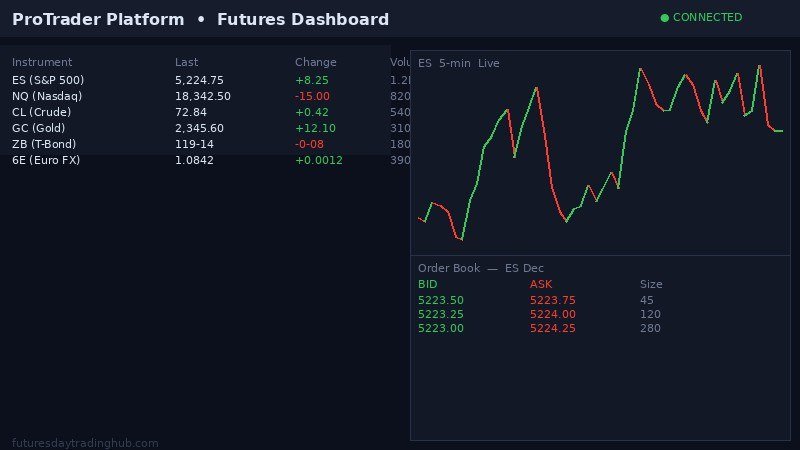
1. NinjaTrader – Best Overall Futures Platform for Beginners
NinjaTrader is the most popular dedicated futures trading platform in the world — and for good reason. It offers a free simulation mode with real market data so you can practice without risking a cent, advanced charting with 100+ indicators, and commission rates as low as $0.09/side for NinjaTrader brokerage accounts. The platform is free to use for charting and simulation; you only pay when you go live.
For beginners trading micro futures like MES (Micro S&P 500) or MNQ (Micro NASDAQ), NinjaTrader’s intuitive order entry and risk management tools make it the natural starting point. Their free education library covers everything from basic futures concepts to advanced order flow analysis.
✅ Pros:
- Free simulation mode with live market data
- Industry-leading charting and analysis tools
- Ultra-low commissions ($0.09/side with NinjaTrader brokerage)
- Massive community and education library
- Supports all major futures: ES, NQ, CL, GC, MES, MNQ
❌ Cons:
- Steeper learning curve than simpler platforms
- Full lifetime license costs $1,099 (annual lease available)
Best for: Serious beginners who plan to trade consistently long-term
2. Tradovate – Best for Low-Cost Micro Futures Trading
Tradovate is a cloud-based futures platform with a clean, modern interface that’s genuinely beginner-friendly. Its flat-rate membership model ($99/month unlimited) makes it ideal once you’re trading frequently. The browser-based platform means no software installs, and the mobile app is among the best in the industry. Tradovate supports all CME micro and standard futures and offers free simulation for practice.
✅ Pros:
- Clean, modern interface — easy to learn
- Flat-rate pricing eliminates per-trade anxiety
- Excellent mobile trading app
- Free sim trading for all accounts
❌ Cons:
- Monthly fee model expensive for low-volume traders
- Less charting depth than NinjaTrader or Sierra Chart
Best for: Active beginners who prefer a clean, modern interface
3. Webull Futures – Best Free Futures Platform for New Traders
Webull launched futures trading with zero platform fees and competitive commissions, making it one of the most accessible entry points for absolute beginners. The familiar Webull interface (popular for stock traders) lowers the switching cost, and the paper trading feature lets beginners practice futures alongside their existing portfolio. Commission is $1.99/contract — higher than NinjaTrader but with no monthly fees.
✅ Pros:
- No platform fees or data fees
- Familiar interface for existing Webull users
- Paper trading available
- Great mobile app
❌ Cons:
- Higher per-contract commissions ($1.99)
- Limited advanced charting vs dedicated futures platforms
Best for: Stock traders making their first move into futures
4. Thinkorswim (TD Ameritrade/Schwab) – Best for Education
Thinkorswim remains one of the most feature-rich trading platforms available, with legendary paper trading, extensive educational content (including “Getting Started with Futures” courses), and competitive commissions ($2.25/contract). Now under Schwab, the platform is fully supported and widely regarded as the best educational resource for new futures traders. The paperMoney simulation is real-time and indistinguishable from live trading — perfect for beginners building confidence.
✅ Pros:
- Industry-best paper trading (paperMoney) — real-time, full-featured
- Exceptional education library and community
- No platform fees
- Advanced charting rivaling professional tools
❌ Cons:
- $2.25/contract commission is higher than competitors
- Platform can feel overwhelming for absolute beginners
Best for: Beginners who want the best educational environment
5. Topstep – Best Funded Trader Program for Beginners
Topstep is different from traditional brokers — it’s a funded trader evaluation program that lets you trade futures with their capital after passing a simulated evaluation. For beginners with limited capital, this is a game-changer: you trade a $50K–$150K simulated account, prove your consistency, and then keep 90% of profits on a funded live account. No risk to personal capital. Topstep uses NinjaTrader, Tradovate, or TSTrader as the execution platform.
✅ Pros:
- Trade with firm capital — eliminate personal financial risk
- Structured rules teach discipline from day one
- Keep 90% of profits on live funded accounts
- Works with NinjaTrader and Tradovate
❌ Cons:
- Monthly evaluation fee ($49–$149/month)
- Strict drawdown rules require consistency before funding
Best for: Undercapitalized beginners who want to trade professionally
Best Trading Desk Setup for Futures Beginners
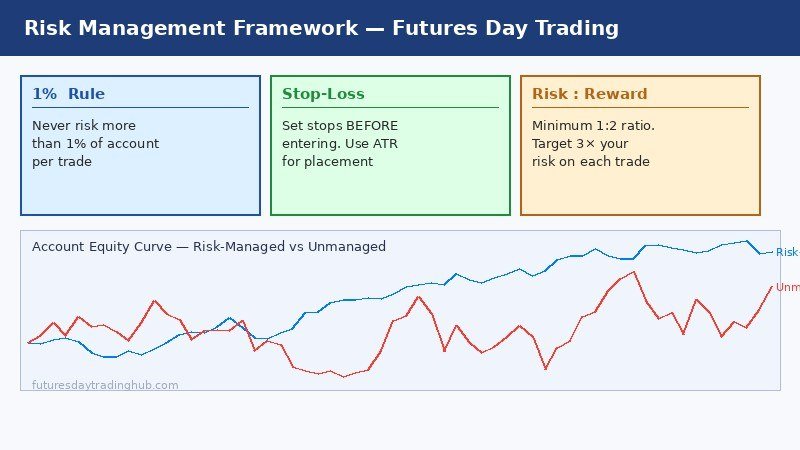
Your trading environment matters as much as your platform. Here’s the gear that makes a real difference for futures day traders.
Best Monitor for Day Trading Futures
Futures traders need screen real estate — charts, order flow, news, and P&L all open simultaneously. A dual or triple monitor setup is standard.
LG 27GP850-B 27″ 1440p 165Hz Gaming Monitor — Sharp 1440p resolution makes reading charts and order books effortless. The 165Hz refresh rate and 1ms response time ensure price action updates render instantly. IPS panel delivers accurate colors for clean candlestick reading.
Dell UltraSharp U2723QE 27″ 4K USB-C Monitor — The gold standard for trading desks. 4K resolution packs enormous data density into a 27″ panel, and the USB-C hub eliminates cable clutter. The factory-calibrated IPS panel is easy on the eyes during long trading sessions.
Best Keyboard for Trading
SteelSeries Apex Pro — Programmable macro keys let you bind order entry hotkeys (buy, sell, flatten, bracket) for instant execution. The adjustable actuation switches mean your hotkeys fire the moment you press them — critical when you need to exit a trade in milliseconds.
Best Books on Futures Trading for Beginners
A Complete Guide to the Futures Market by Jack Schwager — The definitive textbook on futures trading. Covers technical analysis, fundamental analysis, spreads, options on futures, and trading systems. Required reading for any serious futures trader.
Trading in the Zone by Mark Douglas — The most important trading psychology book ever written. Douglas breaks down why most traders fail (mindset, not strategy) and gives you the mental framework to trade consistently. Every futures beginner should read this before going live.
Best Ergonomic Chair for Day Traders
Secretlab TITAN Evo 2022 Gaming Chair — Futures traders spend 6–8 hours at their desk watching charts. The Secretlab TITAN’s lumbar support system, adjustable armrests, and premium memory foam head pillow make all-day trading sessions physically sustainable. Available in multiple sizes to fit any body type.
Best Futures Trading Platform for Beginners – FAQ
What is the best futures trading platform for beginners with a small account?
NinjaTrader is the best overall choice for beginners, especially for small accounts. The free simulation mode lets you practice with zero risk, and micro futures contracts (MES, MNQ) require as little as $50 intraday margin, making it accessible with accounts as small as $500–$1,000. Webull Futures is also excellent if you prefer no monthly fees.
How much money do I need to start futures trading?
With micro futures contracts, you can technically start with as little as $500–$1,000 for MES (Micro E-mini S&P 500) or MNQ (Micro NASDAQ) intraday trading. However, most experienced traders recommend starting with at least $2,000–$5,000 to properly manage drawdowns and not over-leverage. Funded programs like Topstep eliminate the capital requirement entirely.
Is futures trading good for beginners?
Futures trading has a steep learning curve and carries significant risk due to leverage. However, micro futures contracts have made it more accessible than ever, and the 23-hour trading window (vs. stock market hours) provides flexibility. Most beginners should spend 3–6 months in simulation before risking real capital. The best futures trading platform for beginners will include robust paper trading features — prioritize this above everything else.
What futures contracts should beginners trade?
Start with MES (Micro E-mini S&P 500) or MNQ (Micro NASDAQ-100). These micro contracts are 1/10th the size of the standard ES and NQ contracts, meaning each tick move is $1.25 (MES) or $0.50 (MNQ) instead of $12.50/$5. This dramatically reduces risk while you learn. Both are extremely liquid with tight spreads, trading nearly 24 hours a day.
Do I need expensive software for futures trading?
No — NinjaTrader and Thinkorswim are both free to use for charting and simulation. NinjaTrader charges commissions only when you go live, while Thinkorswim (TD Ameritrade/Schwab) has no platform fees at all. You don’t need to spend money on software until you’re consistently profitable in simulation.
Final Verdict – Best Futures Trading Platform for Beginners in 2025
The best futures trading platform for beginners in 2025 depends on your priorities:
- 🥇 NinjaTrader — Best overall; lowest commissions, best simulation, best long-term scalability
- 🥈 Thinkorswim — Best education and paper trading environment
- 🥉 Topstep — Best if you want to trade without personal capital at risk
- 💰 Webull Futures — Best for zero platform fees
Whatever platform you choose, spend at least 90 days in simulation before trading live capital. The markets will always be there — your capital won’t be if you rush. For more trading resources, strategies, and platform reviews, explore FuturesDayTradingHub.com.
Have a platform you love? Drop it in the comments — we actively update this guide based on community feedback.
Comments
4 responses to “Best Futures Trading Platform for Beginners in 2025 – Top Picks Reviewed”
[…] Both offer free simulation modes — use them for at least 30 days before going live. Visit our platform comparison guide for a full […]
[…] trade margins vary by broker. See our best futures trading platforms review for current margin […]
[…] Check our best futures trading platforms guide to complete your professional setup. Learn about ES vs NQ futures to optimize your trading strategy alongside your workspace. […]
[…] Check our best futures platforms guide to ensure you’re using broker-approved systems for tax reporting. Read our books recommendation for deductible education investments. […]