
The debate between ES futures vs NQ futures is one every aspiring day trader faces when entering the futures market. The E-mini S&P 500 (ES) and E-mini Nasdaq-100 (NQ) are the two most traded stock index futures contracts in the world, with combined daily volumes exceeding 4 million contracts. But which one is right for you as a beginner? In this detailed comparison, we’ll break down the key differences in volatility, margin requirements, tick values, trading hours, and strategies to help you make an informed decision.
If you’re completely new to futures trading, start with our step-by-step guide to day trading futures before diving into this comparison. Already know the basics? Let’s compare these two giants head to head.
What Are ES Futures and NQ Futures?
Before comparing ES futures vs NQ futures, let’s clarify exactly what each contract represents and who uses them.
ES Futures (E-mini S&P 500)
The ES contract tracks the S&P 500 Index, which represents 500 of the largest U.S. publicly traded companies across all sectors. It’s the most diversified and widely-followed benchmark for the overall U.S. stock market. One ES contract controls approximately $250,000 in notional value (at S&P 5000), with each tick (0.25 points) worth $12.50.
NQ Futures (E-mini Nasdaq-100)
The NQ contract tracks the Nasdaq-100 Index, which consists of the 100 largest non-financial companies listed on the Nasdaq exchange. It’s heavily weighted toward technology stocks — Apple, Microsoft, Nvidia, Amazon, and Meta alone make up roughly 40% of the index. One NQ contract controls approximately $360,000 in notional value (at NQ 18000), with each tick (0.25 points) worth $5.00.

ES Futures vs NQ Futures: Key Differences Compared
Here’s a side-by-side comparison of the most important specifications that affect your daily trading:
| Feature | ES (E-mini S&P 500) | NQ (E-mini Nasdaq-100) |
|---|---|---|
| Exchange | CME Group | CME Group |
| Index Tracked | S&P 500 | Nasdaq-100 |
| Point Value | $50 per point | $20 per point |
| Tick Size | 0.25 pts ($12.50) | 0.25 pts ($5.00) |
| Avg Daily Range | 40-60 points | 150-250 points |
| Avg Daily $ Range | $2,000-3,000 | $3,000-5,000 |
| Day Trade Margin | $500-2,000* | $1,000-3,000* |
| Sector Exposure | All 11 GICS sectors | Heavy tech/growth |
| Volatility | Lower (beta ~1.0) | Higher (beta ~1.2-1.4) |
| Avg Daily Volume | ~1.5M contracts | ~800K contracts |
| Trading Hours | Sun-Fri, nearly 24h | Sun-Fri, nearly 24h |
*Day trade margins vary by broker. See our best futures trading platforms review for current margin rates.
Volatility Comparison: ES vs NQ
Volatility is the single most important factor when choosing between ES and NQ futures as a beginner. NQ futures are significantly more volatile than ES futures — typically 1.5x to 2x the daily point range. This means:
- NQ offers larger profit potential per trade — a 100-point move in NQ = $2,000 per contract
- NQ also means larger losses — that same 100-point move against you = -$2,000
- ES is more forgiving — slower moves give you more time to react and manage trades
- ES has tighter spreads — usually 0.25 points (1 tick) during regular trading hours
For beginners, the lower volatility of ES is generally safer. You can learn proper risk management, entry timing, and exit strategies without being whipsawed by NQ’s rapid 50-100 point swings during news events.
When NQ Volatility Works in Your Favor
That said, experienced scalpers often prefer NQ because the larger moves create more opportunities. If you’re trading with tight stop losses (10-20 NQ points), the risk-reward ratio can actually be favorable since NQ tends to have stronger momentum continuation than ES.
Good trading books can accelerate your learning curve significantly. Check out our curated list: Best Books on Futures Trading.
Margin Requirements and Capital Needed
Margin requirements determine how much capital you need to trade each contract. There are two types of margin for futures:
Intraday (Day Trade) Margin
Most futures brokers offer reduced intraday margins for positions opened and closed within the same trading session. Typical intraday margins in 2025:
- ES: $500-$2,000 per contract (broker-dependent)
- NQ: $1,000-$3,000 per contract (broker-dependent)
- MES (Micro E-mini S&P): $50-$200 per contract
- MNQ (Micro E-mini Nasdaq): $100-$300 per contract
Overnight Margin
If you hold positions past the session close (typically 4:00 PM CT), you’ll need full CME exchange margins:
- ES: ~$13,200 per contract
- NQ: ~$18,700 per contract
As a beginner, we strongly recommend starting with micro contracts (MES/MNQ) which are 1/10th the size of their E-mini counterparts. This lets you learn with real money while risking much less capital.
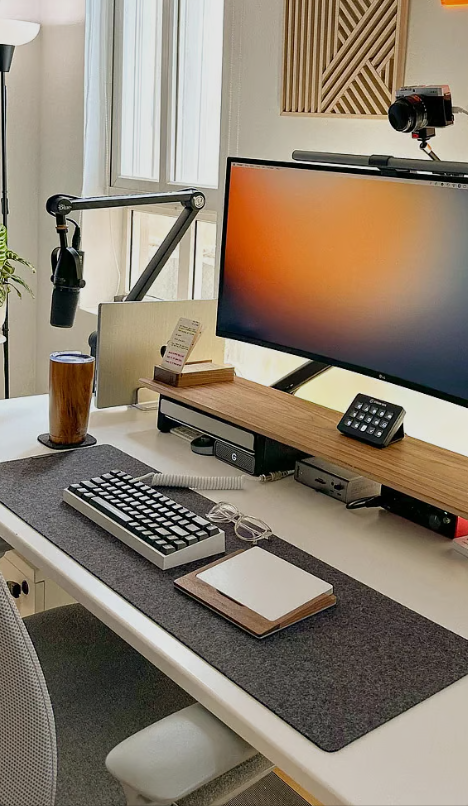
A comfortable trading setup helps you stay focused during volatile markets:
👉 Check Price on Amazon – HUANUO Dual Monitor Stand for Trading Desk
Which Is Better for Scalping: ES or NQ?
Scalping — taking quick trades for small profits — is the most popular day trading style for index futures. Here’s how ES and NQ compare for scalpers:
Scalping ES Futures
- Pros: Tighter spreads, more predictable price action around support/resistance, higher volume at key levels
- Cons: Smaller moves mean you need more contracts for the same dollar profit
- Typical target: 2-4 ES points ($100-200 per contract)
- Best timeframe: 1-minute to 5-minute charts
Scalping NQ Futures
- Pros: Larger point moves create bigger profit targets, strong trending behavior
- Cons: Wider stops needed, faster price action requires quicker decisions
- Typical target: 10-20 NQ points ($200-400 per contract)
- Best timeframe: 1-minute to 5-minute charts
The verdict: ES is better for new scalpers because the slower price action gives you more time to think. Once you’re consistently profitable on ES, transitioning to NQ scalping is a natural progression.
👉 Check Price on Amazon – ASUS ProArt PA278QV 27″ Monitor for Trading
Best Trading Strategies for ES and NQ Futures

Strategy 1: Opening Range Breakout
Mark the high and low of the first 15-30 minutes after the 9:30 AM ET open. Trade the breakout direction with a stop loss inside the range. This works well on both ES and NQ but tends to produce larger moves on NQ due to tech-sector momentum.
Strategy 2: VWAP Mean Reversion
ES futures tend to revert to VWAP (Volume Weighted Average Price) more reliably than NQ. Trade pullbacks to VWAP with defined risk levels. This strategy is more suited to ES due to its lower volatility and stronger mean reversion tendencies.
Strategy 3: Level-to-Level Trading
Identify key support and resistance levels from daily/weekly charts and trade reactions at those levels. Both ES and NQ respect major levels, but ES tends to have cleaner reactions due to its broader market representation.
👉 Check Price on Amazon – Trading in the Zone by Mark Douglas
Micro Futures: The Best Starting Point for Beginners
If you’re torn between ES and NQ, the answer might be to start with micro contracts:
- MES (Micro E-mini S&P 500): $5 per point, $1.25 per tick — 1/10th of ES
- MNQ (Micro E-mini Nasdaq-100): $2 per point, $0.50 per tick — 1/10th of NQ
Micro futures let you trade both markets simultaneously to see which fits your personality and strategy. Many successful traders start on micros for 3-6 months before graduating to E-mini contracts. The margin requirements are a fraction of the cost, making them accessible with accounts as small as $2,000-5,000.
👉 Check Price on Amazon – BenQ GW2780 27″ IPS Monitor
Our Recommendation: ES or NQ for Beginners?
After trading both contracts extensively, our recommendation for most beginners is clear:
Start with MES (Micro S&P 500 futures) for your first 3-6 months. The lower volatility, tighter spreads, and more predictable price action make it the ideal training ground. Once you’re consistently profitable, you can:
- Scale up to ES (E-mini S&P) for larger position sizes
- Add MNQ/NQ for higher-volatility opportunities
- Trade both ES and NQ simultaneously for portfolio diversification
The traders who blow up their accounts fastest are usually beginners who jump straight into NQ for the “big moves” without understanding risk management. Don’t make that mistake.
A proper trading workstation makes all the difference. Invest in quality monitors:
👉 Check Price on Amazon – Samsung Odyssey G5 34″ Ultrawide Monitor
👉 Check Price on Amazon – Secretlab Titan Evo Trading Chair
Frequently Asked Questions
Is ES or NQ more profitable for day trading?
NQ has higher profit potential per contract due to its greater volatility and larger daily point range. However, it also carries proportionally higher risk. ES offers more consistent, predictable profits that are easier to achieve for beginners. The most profitable contract depends on your strategy and risk tolerance.
How much money do I need to start trading ES or NQ futures?
You can start trading micro futures (MES/MNQ) with as little as $2,000-5,000. For E-mini contracts, we recommend a minimum of $10,000-25,000 to properly manage risk. Most brokers offer intraday margins of $500-2,000 per ES contract, but you should never trade with just the minimum margin — always have adequate risk capital.
What time of day is best for trading ES and NQ futures?
The highest volume and best trading opportunities occur during the Regular Trading Hours (RTH) session from 9:30 AM to 4:00 PM Eastern Time. The first 90 minutes (9:30-11:00 AM ET) and last hour (3:00-4:00 PM ET) typically offer the most volatility and cleanest setups for day traders.
Can you trade ES and NQ futures at the same time?
Yes, many experienced traders trade both ES and NQ simultaneously. This can be done as a spread trade (long one, short the other) or by taking independent directional trades in each market. However, beginners should focus on mastering one contract before adding a second to avoid overcomplicating their trading.
Why do ES and NQ sometimes move in different directions?
ES and NQ can diverge when sector rotation occurs. Since NQ is heavily tech-weighted (~60% technology), events that specifically impact tech stocks (earnings, interest rate changes, AI news) can cause NQ to move differently from the broader S&P 500. This divergence creates unique trading opportunities for experienced traders.
Wrapping Up: ES Futures vs NQ Futures
Both ES futures and NQ futures are excellent instruments for day trading, but they serve different purposes and suit different trading personalities. ES is the steady, diversified workhorse — ideal for beginners, mean-reversion strategies, and lower-stress trading. NQ is the high-octane, momentum-driven contract — perfect for experienced traders who thrive on volatility and can handle larger swings.
Start with micro contracts, master your strategy on one market, then expand from there. The futures market isn’t going anywhere — take your time and build your skills systematically.
Comments
One response to “ES Futures vs NQ Futures – Which Should You Trade as a Beginner?”
[…] our best futures trading platforms guide to complete your professional setup. Learn about ES vs NQ futures to optimize your trading strategy alongside your […]